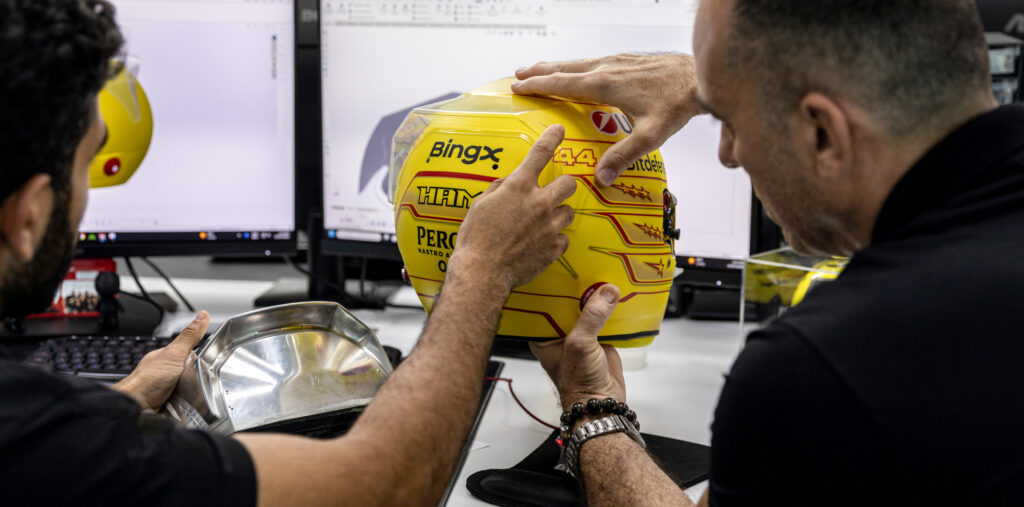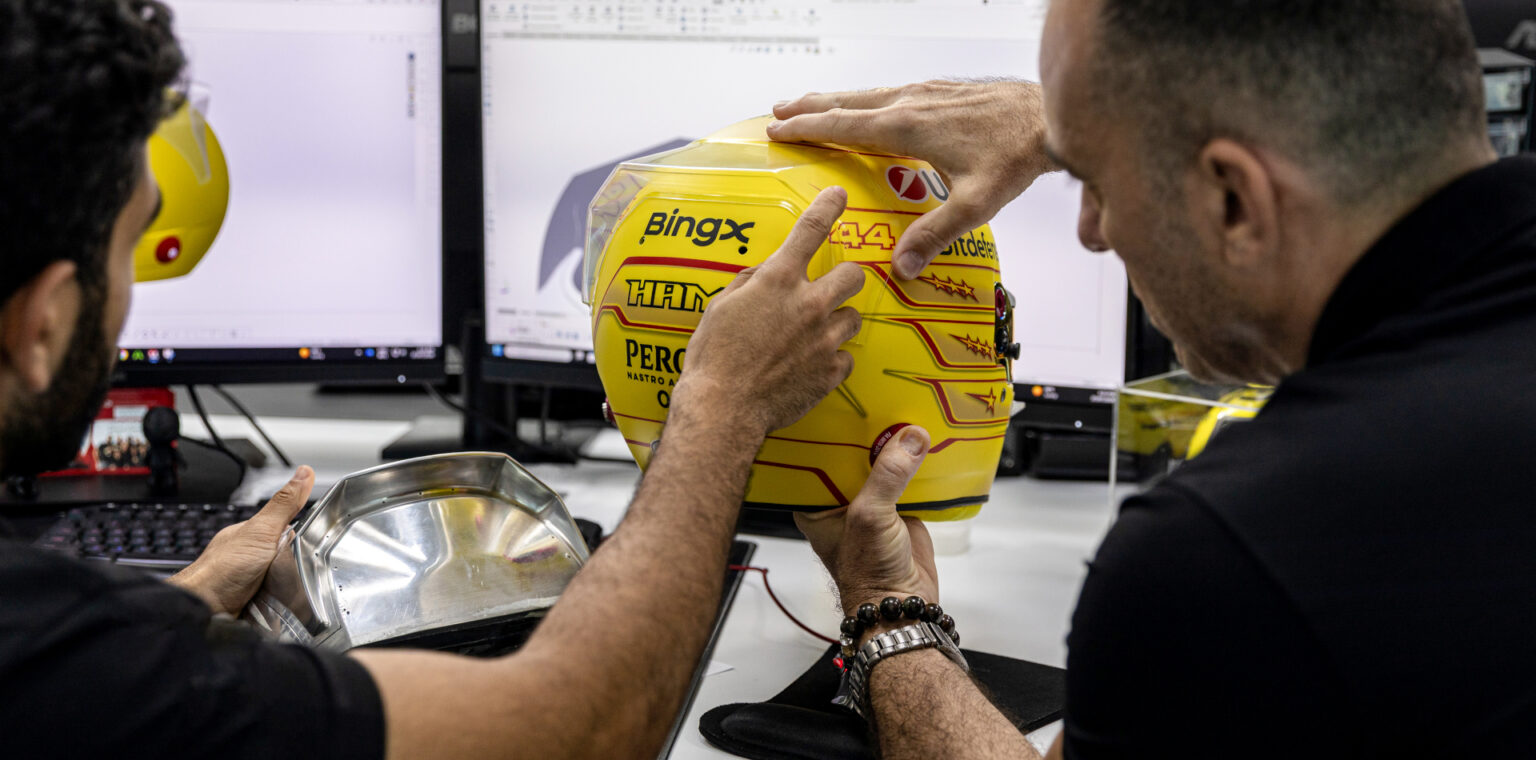
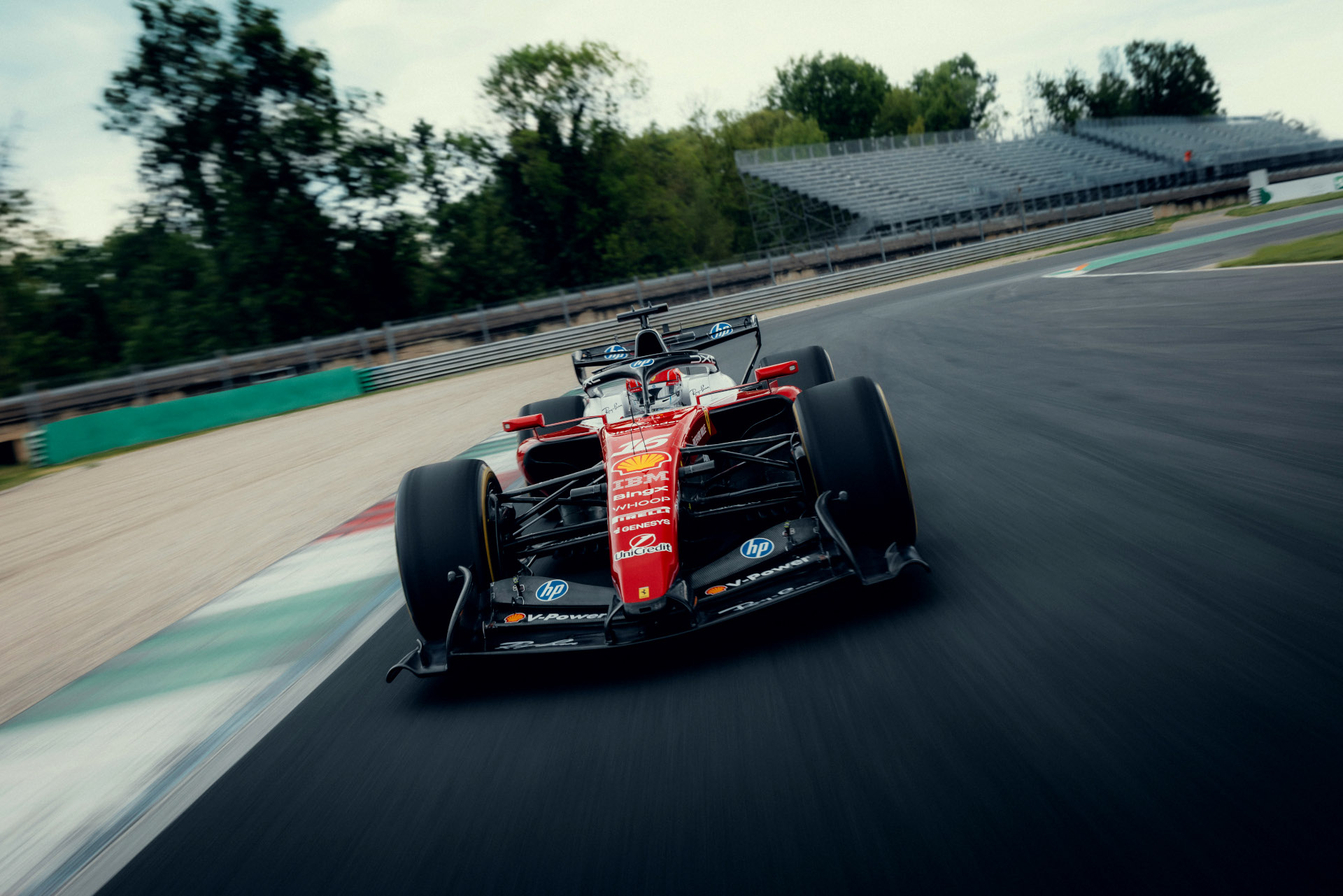
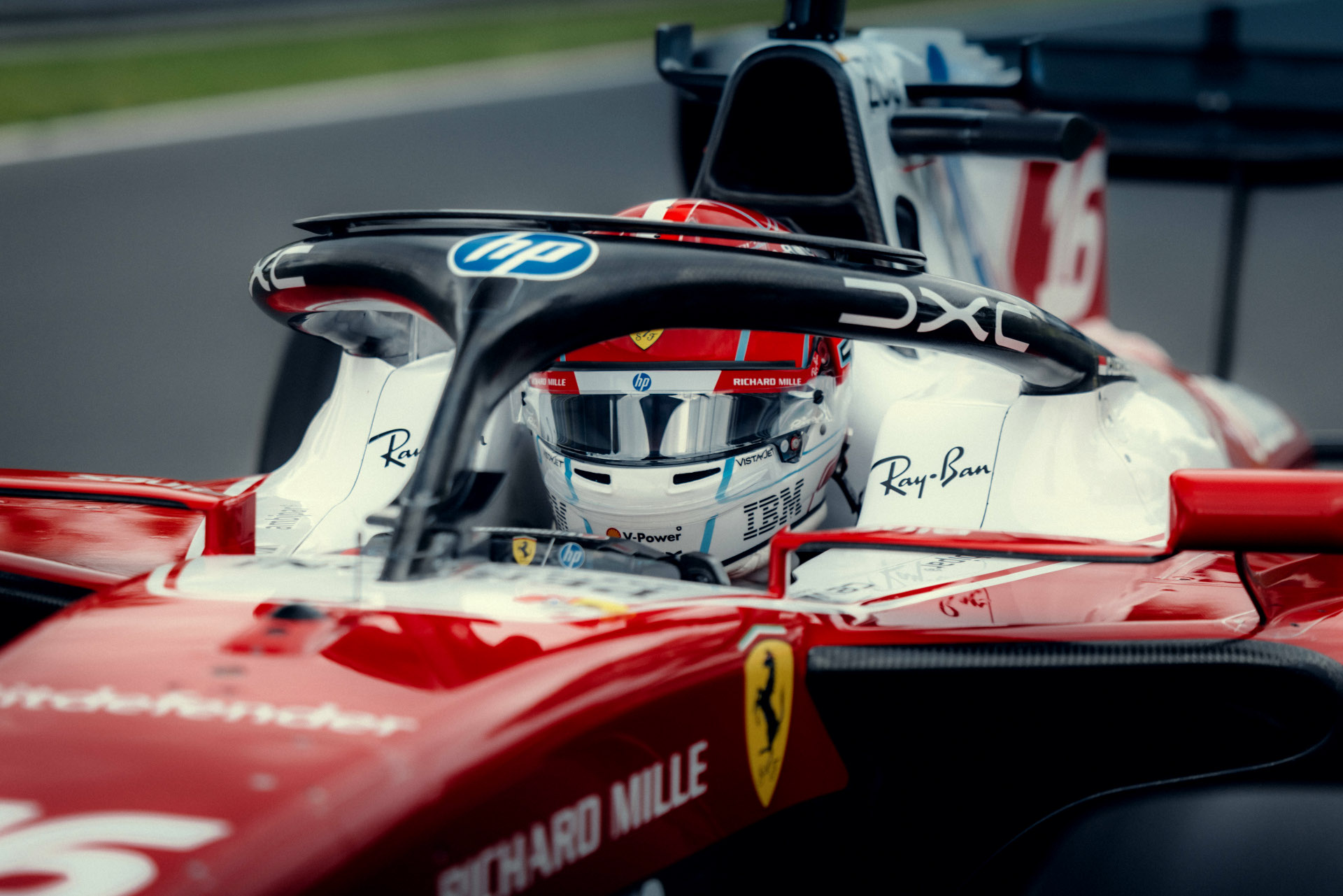
In Formula 1, where every detail matters, a helmet is more than just a piece of safety equipment. It must be lightweight, comfortable, and seamlessly integrated into the car’s aerodynamic profile, as it is constantly exposed to external turbulences. For this reason, optimizing the helmet’s aerodynamics is a key element of the technical partnership between Bell Racing and Scuderia Ferrari HP, result of an ongoing collaborative process that is renewed at the start of each season with the development of bespoke spoilers and aerodynamic appendices.
The helmet model used by Scuderia Ferrari HP drivers is the HP77, certified to FIA 8860-2018 APB standards. It combines advanced ballistic materials in the front area, a carbon shell for maximum lightness, and sophisticated ventilation and defogging systems. The HP77, Bell Racing’s most advanced helmet, can be equipped with standard spoiler options, but the legendary Italian team benefits from tailor-made solutions.
“There are many variables to consider, including the design of the car, which evolves every season, and the driver’s individual features – especially their body structure and position in the cockpit,” explains Paolo Emanuele Vallini, R&D Project and Planning Manager at Bell Racing. “This work is done for both official drivers Charles Leclerc and Lewis Hamilton, as well as for reserve drivers.”
Everything starts with airflow simulations carried out by the Maranello-based outfit, who share their data with Bell Racing engineers at their facility in Sakhir, near the Bahrain International Circuit – home to the Bahrain Grand Prix and where the design and manufacturing hub for all the helmets is carried out.
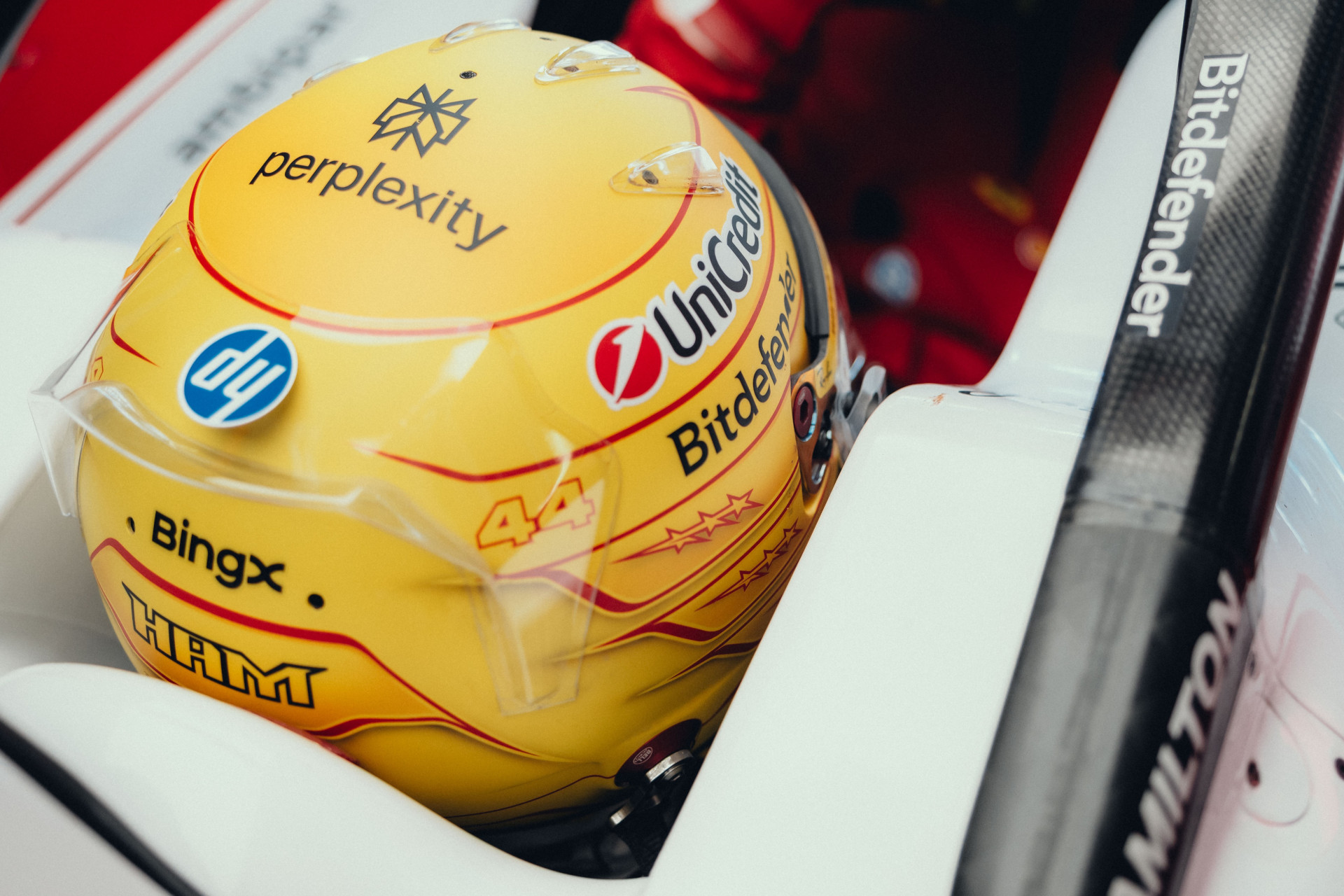
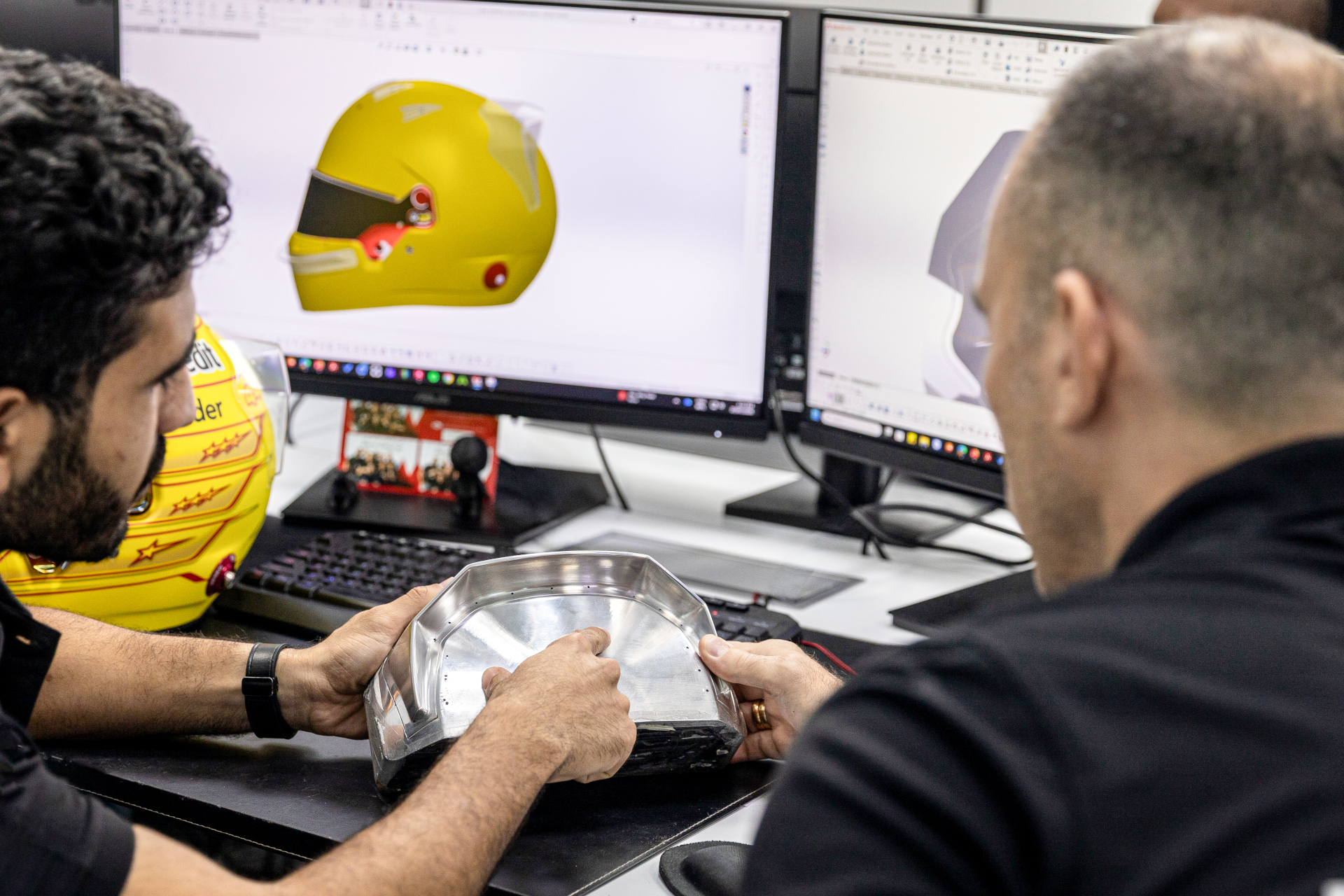
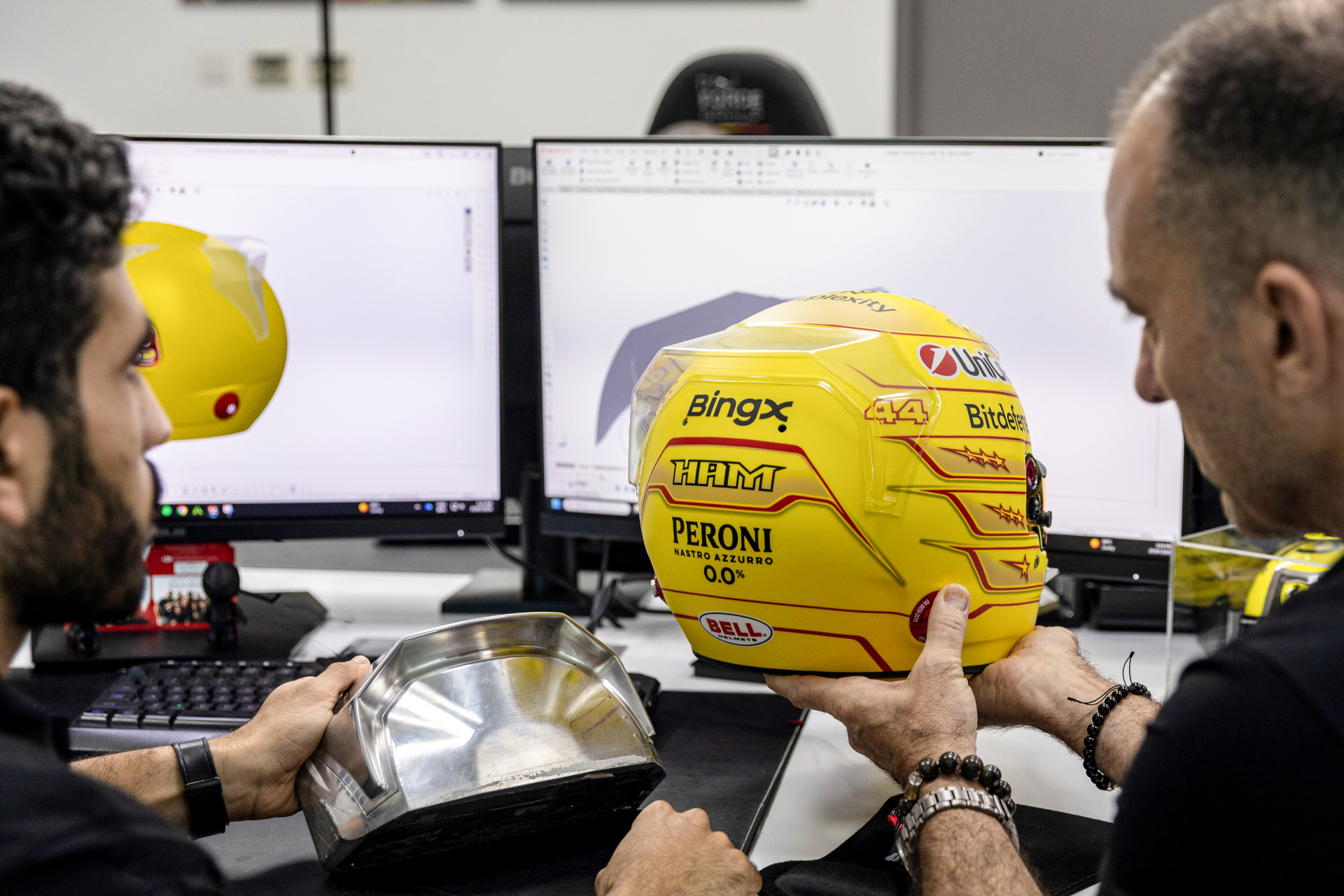
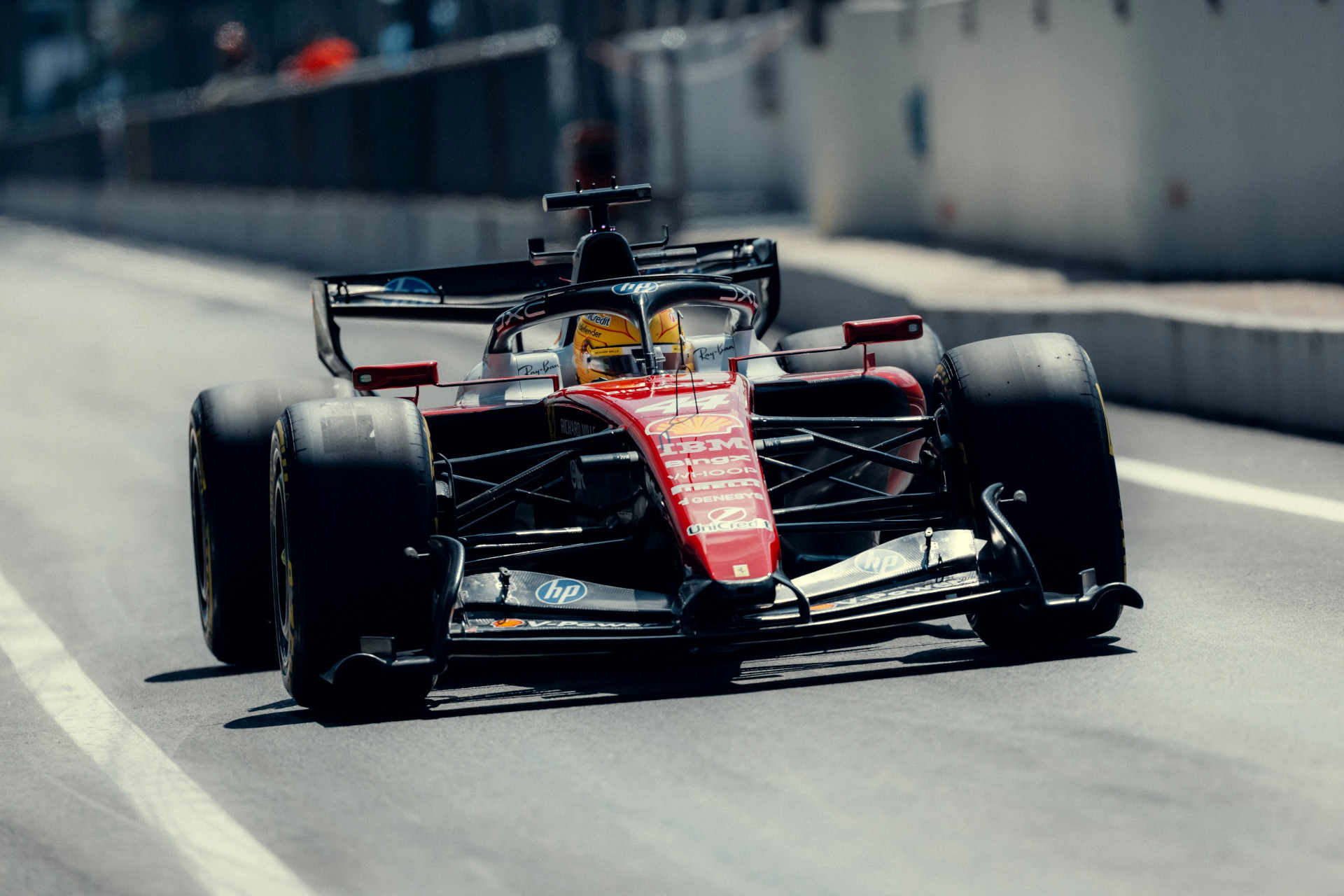
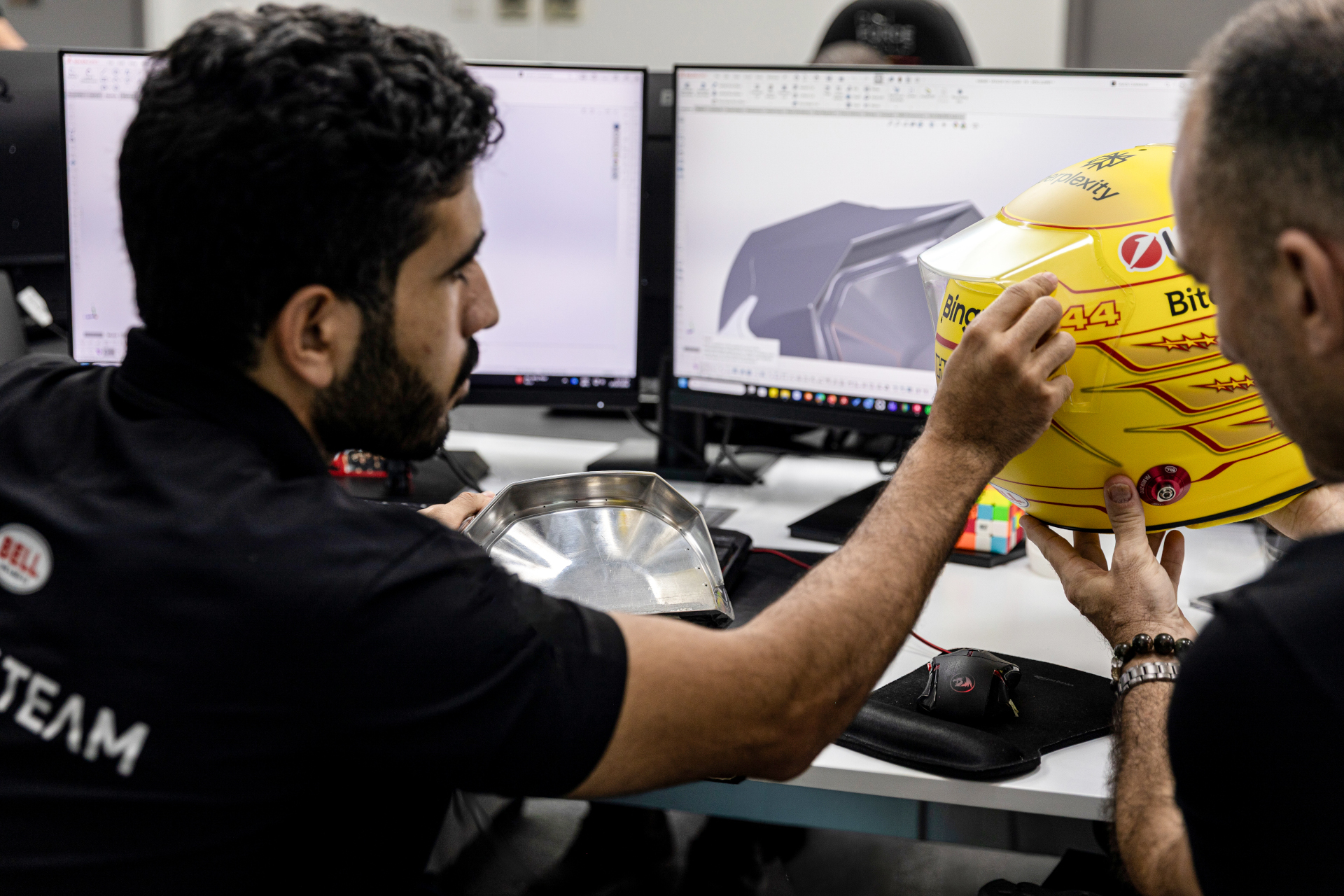
“During pre-season, Scuderia Ferrari HP asks us to update the spoilers to suit the aerodynamics of the upcoming car,” says Vallini. “Their calculations are initially based on the previous specifications, and then recalibrated for the new car. At Bell Racing, we assess the feasibility of these modifications through CAD studies conducted by our R&D department. Since the spoilers are made from thermoformed materials, they must comply with certain constraints dictated by the mold shapes. The challenge is to find the best possible compromise between all the factors involved, through continuous exchange of information and ideas to achieve the optimal result,” Vallini emphasizes.
In an open-wheel car, spoilers are crucial. At high speeds, airflow impacts the helmet just like it does with the rest of the car’s surface. Additional aerodynamic elements help stabilize the airflow around the helmet shell, preventing unexpected movements and vibrations that could increase drag – and affect straight-line speed. Beyond performance, the spoiler also contributes to the drivers’ safety and comfort, enabling them to stay fully focused on driving.